What Is UL 1332 Wire? Specifications, Applications and Selection Guide
2026-09-14 Author:博利电业
2026-09-14 Author:博利电业
Internal wires used in appliances, sensors, lighting equipment and industrial electronics may be installed near heating elements, circuit boards or other heat-generating components.
When conventional PVC wire cannot meet the required operating temperature, FEP-insulated high-temperature wire may provide a more suitable solution.
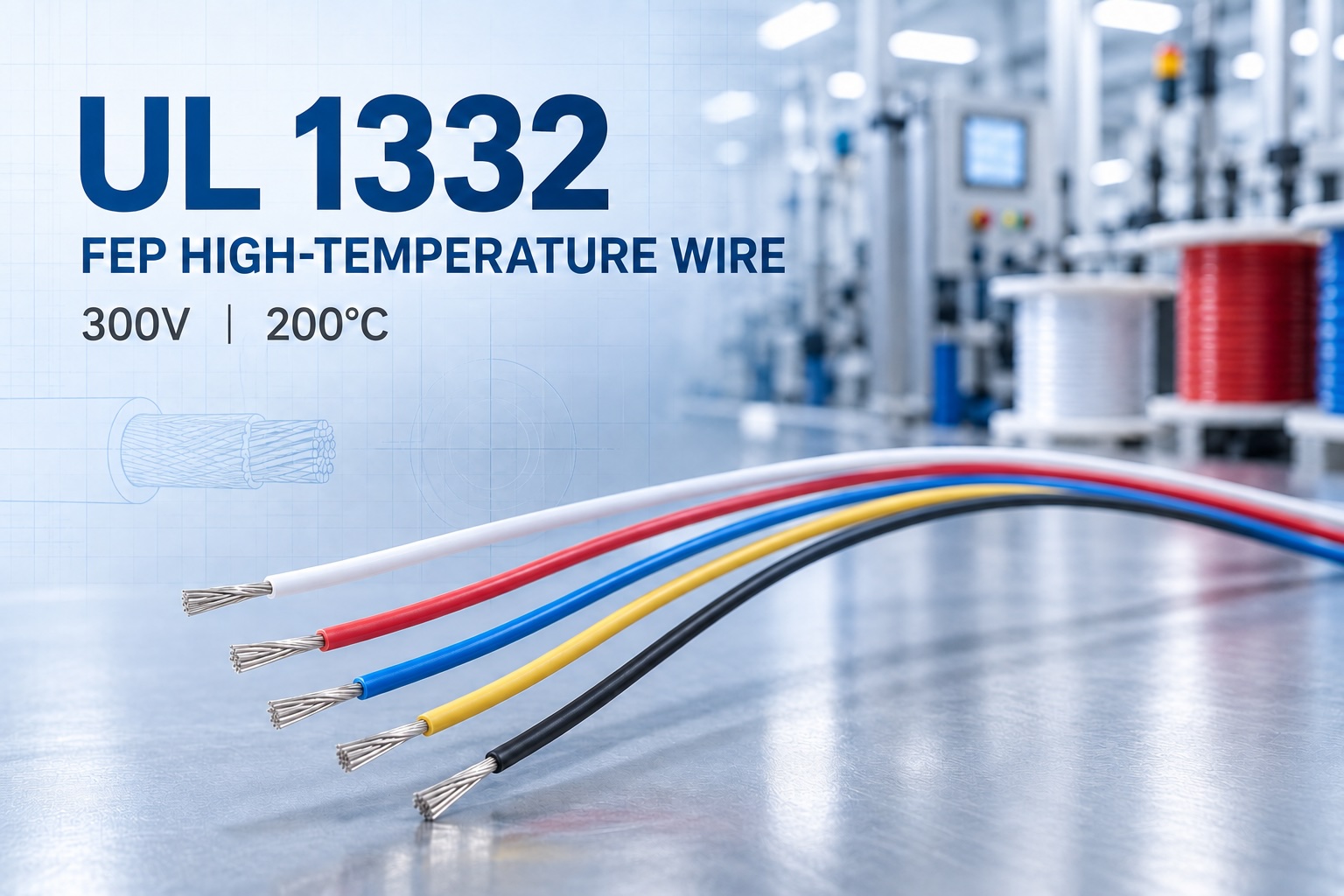
UL 1332 is a commonly used FEP-insulated Appliance Wiring Material. It is typically rated 300V and 200°C and is primarily intended for internal wiring in electrical and electronic equipment.
| Item | Typical specification |
|---|---|
| UL Style | UL AWM Style 1332 |
| Wire type | Single-conductor AWM wire |
| Rated voltage | 300V |
| Rated temperature | 200°C |
| Insulation | FEP |
| Conductor | Solid or stranded, depending on construction |
| General use | Internal wiring of appliances and equipment |
Although different manufacturers may offer the same UL Style, available conductor sizes, stranding, diameters, tolerances, colors and packaging can vary. Buyers should therefore review the manufacturer’s technical datasheet and UL certification information before placing an order.
FEP is a fluoropolymer insulation material offering a combination of thermal capability, electrical insulation and compact construction.
UL 1332 wire has a typical temperature rating of 200°C, making it suitable for equipment that requires a higher temperature rating than conventional PVC electronic wire.
However, a 200°C wire rating does not mean that the terminals, connectors and other components in the finished assembly can also operate continuously at 200°C. The temperature rating of the complete system must be evaluated separately.
FEP provides reliable dielectric properties for internal connections in sensors, electronic equipment and control systems.
FEP insulation can support compact wire designs while meeting the applicable construction requirements. This can be beneficial in products with limited internal space or high wiring density.
FEP generally offers good resistance to many chemicals and solvents. Actual compatibility must still be evaluated according to the chemical substance, concentration, temperature and exposure time.
Typical applications include:
NTC and PTC thermistors
Temperature sensors and probes
Sensor lead wires
Ovens, heaters and kitchen appliances
Lighting equipment
Industrial automation systems
Electronic instruments
Measuring equipment
Motors and coils
Internal wiring near high-temperature areas
Suitability cannot be determined by UL Style alone. Engineers must also consider voltage, current, ambient temperature, bending requirements, chemical exposure, flame requirements and end-product certification.
UL 1332 is primarily classified as Appliance Wiring Material for internal equipment wiring.
It should not automatically be considered suitable for building wiring, field installation or general external power-cord applications. These uses may require different product standards and installation approvals.
The final selection should be reviewed according to the equipment standard, installation method and target market.
To obtain an accurate technical evaluation and quotation, buyers should provide:
Required UL Style
Rated temperature and voltage
AWG size or conductor cross-sectional area
Solid or stranded conductor
Conductor plating requirement
Insulation color
Maximum overall diameter
Required quantity per size and color
Operating environment
Chemical or oil exposure
Cutting, stripping or terminal requirements
Target market and end-product certification
Providing complete application information helps reduce selection errors and enables the wire manufacturer to recommend a more appropriate construction.
UL 1332 is commonly associated with FEP insulation. The material and construction should still be verified against the manufacturer’s technical datasheet and UL certification information.
The typical ratings are 300V and 200°C. Always verify the marking and specifications of the actual product being purchased.
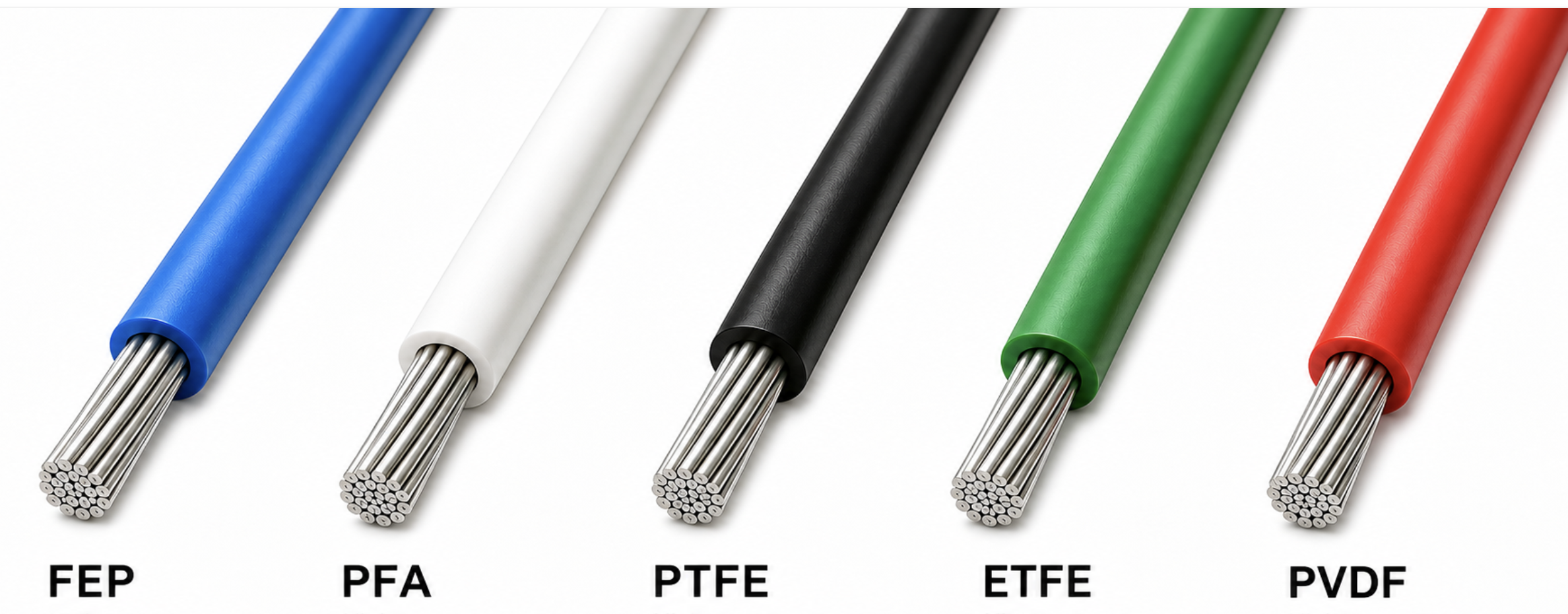
“Teflon wire” is commonly used in the market as a general description for fluoropolymer-insulated wire. However, FEP, PFA, PTFE and ETFE are different materials with different properties and processing characteristics.
The exact insulation material should therefore be specified rather than relying only on the term “Teflon wire.”
UL 1332 can be considered for certain temperature-sensor and probe-lead applications. Operating temperature, conductor construction, overall diameter, bending conditions, sealing process and final product requirements must also be evaluated.
BOLI Electronic supplies a wide range of FEP, PFA, ETFE, PTFE, PVDF and Silicone high-temperature wires.
Customers looking for UL 1332 FEP wire, 200°C high-temperature wire or sensor lead wire are welcome to provide drawings and technical requirements for evaluation.
Website: www.bolicable.com